
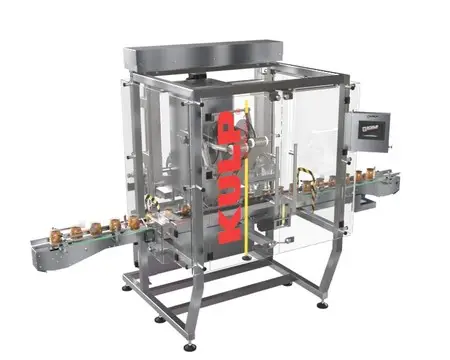
2-HEAD FOIL SEALING MACHINE
Designed for heat-sealing foil onto plastic and glass jars. Capacity:
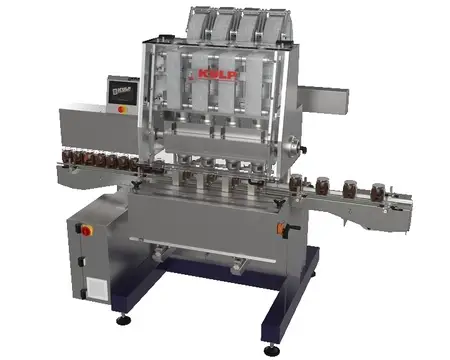
4-HEAD FOIL SEALING MACHINE
Designed for heat-sealing foil onto plastic and glass jars. Capacity:
Foil Sealing Machines
Foil Sealing Machines: Your “You Are the First to Open It” Guarantee and Leak-Proof Shield
Imagine standing in a supermarket aisle as a consumer. You pick up a vitamin bottle, a jar of peanut butter, or motor oil. You twist the cap and… what’s this? There is no protective foil, or it’s half-open. Would you buy that product? Probably not. Questions like “Has this been opened before?” or “Has air gotten in and spoiled it?” immediately flood your mind. You quietly put it back and grab the one behind it.
For a manufacturer, this small moment is a matter of “existence or extinction.”
You must protect the freshness and safety of that wonderful product from the moment it leaves the factory until it reaches the customer’s kitchen. This is exactly where Foil Sealing (Induction) Machines come in. These machines don’t just stick a piece of aluminum; they sign the “contract of trust” between your brand and your customer.
At Kulp Makine, we know that packaging is more than just filling. The final signature you apply after closing the cap—foil coating—is the greatest savior of logistics processes and shelf life. Let’s examine together why this technology is not a “luxury” but a “necessity.”
What is Induction (Foil) Sealing? Not Magic, Just Engineering
It’s perfectly fine if you aren’t familiar with technical terms. The logic is actually quite simple. Induction foil sealing is a non-contact heating process.
How the process works:
Inside your bottle’s cap, there is a pre-inserted special liner (foil liner).
After filling, the bottle is capped and moves along the conveyor belt.
As the bottle passes under the head of the Foil Sealing Machine (the machine never touches the bottle), a magnetic field is created.
This magnetic field heats the aluminum foil inside the cap in a fraction of a second.
The heated foil melts the thin wax layer on it and adheres firmly to the mouth (rim) of the bottle.
Once the bottle cools, the foil is integrated with the bottle. Even if the cap is opened, the foil stands there like a “fortress gate.”
The result? No air enters, no liquid leaks, and no bacteria grow.
Why Should You Use a Foil Sealing Machine?
Some manufacturers ask us: “My cap already closes very tightly, do I really need foil?” Our answer is always clear: If you are doing e-commerce or if shelf life matters to you, absolutely yes.
1. 100% Leak-Proofing (Ending Logistics Nightmares)
With the rise of e-commerce, courier companies have become the ultimate test for our products. Think of packages thrown, turned upside down, or placed under heavy loads. A cap alone (no matter how tight) can loosen under pressure. Foil sealing hermetically seals the mouth of the bottle. Even if the product is inverted or the box is crushed, it won’t leak. It is the surest way to zero out complaints about “leaking products” and returns.
2. Extends Shelf Life (The Freshness Lock)
Oxygen and moisture are the greatest enemies of food. Coffee exposed to air goes stale, nuts soften, and medicines lose their potency. Induction foil completely severs the link between the outside world and the product. Your product retains the aroma and freshness of the day it was packaged, even months later.
3. Security and Authenticity (Tamper Evident)
It is the most professional way to tell the customer, “You are the first to open this.” Additionally, by printing your brand logo on the foil, you can prevent counterfeit products and increase your brand prestige.
Kulp Makine Difference: Which Machine Is Right for You?
At Kulp Makine, we offer solutions suitable for every production capacity. Foil sealing is a process that must be error-free because, from the outside, you cannot see if the foil has adhered (since the cap is closed). This makes reliable technology a must.
Manual (Handheld) Devices: Ideal for beginners, boutique producers, or laboratories. You hold a gun-like device over the cap, press the button, and the process is complete. It is economical and practical for low capacities like 500-1,000 units per day.
Semi-Automatic and Automatic On-Line Models: When the business grows, handheld devices become too slow. Automatic heads mounted on your conveyor belt seal bottles “on the fly” without stopping them. Kulp Makine systems also offer optional faulty product detectors. If a bottle lacks foil or the cap is loose, the machine detects it and warns the operator or rejects the bottle. We call this “blind trust.”
For Which Industries Is It a “Must-Have”?
Foil sealing has a much wider range of use than you might think.
Food: Ketchup, mayonnaise, chocolate cream, honey, peanut butter, sports nutrition, spices, milk powders. (Leak-proofing is vital, especially for oily products).
Chemicals and Mineral Oil: Motor oils, antifreeze, pesticides, liquid fertilizers. Spilling these products is not just a financial loss; it is an environmental disaster. Foil prevents this.
Pharmaceuticals and Supplements: Tablets, syrups, vitamins. Anything that needs protection from moisture.
Cosmetics: Creams, lotions, shampoos.
The Human Touch: Brand Perception and That “Click” Sound
As a machine manufacturer, we love technical details, but the psychological side shouldn’t be overlooked. The sound and sensation when a consumer peels back or punctures the foil creates a subconscious perception of “quality.” It makes your product feel “premium.” A simple piece of aluminum is your brand’s way of saying, “I care about my work.”
The advantage of working with Kulp Makine is not just buying a machine; it’s our help in choosing the most suitable foil type for your cap and bottle. This is because the foil that sticks to a glass bottle is different from the one for a plastic bottle. The wrong choice leads to non-adherent foils and wasted money. We share this expertise with you.
Conclusion: Small Investment, Big Trust
You may have millions of liras worth of filling machines on your production line. However, at the end of the process, if you are a brand with leaking or stale products, all that investment goes to waste. Foil sealing machines are insurance policies with relatively low costs but massive impacts.
Secure your product with the experience of Kulp Makine. Stop arguing with courier companies over leaking bottles and losing customers over spoiled products. Bring your samples to our factory and let’s test them. Let’s determine together the speed, power, and foil you need. Your product deserves the best.
Frequently Asked Questions (FAQ)
1. Does it matter if the cap is plastic or metal?
Yes, it matters a lot! Induction systems work with magnetic fields. If your cap is metal, the magnetic field will heat the cap before it heats the foil, which is dangerous (it can melt plastic threads). Therefore, induction sealing is generally performed with plastic caps. If you must use metal caps, very special and different systems are required; standard machines are not suitable.
2. Can I process every bottle with the same machine?
Induction machines have heads with a specific diameter range (e.g., between 20mm and 80mm). If your bottle cap diameters are within this range, one machine is enough. You simply need to adjust the machine’s power setting and conveyor height.
3. Can I stick foil onto glass bottles?
Yes, you can, but “foil selection” is critical here. Foils used for plastic bottles (PE, PP, PET) will not stick to glass. You must use foils specifically produced for glass with an adhesive compatible with glass. The machine is the same; the only thing that changes is the foil material.
4. Does this process slow down my production speed?
No, on the contrary, it is one of the fastest processes. Induction is a “non-contact” process. Bottles move on the conveyor and pass under the head without hesitation. Whether you fill 2,000 bottles or 20,000 bottles per hour, there is an induction unit available at a compatible speed.
5. Do I have to put the foil inside the caps myself?
This is usually done by your cap supplier. When ordering caps, you should say, “I want caps with induction liners.” The foils come pre-cut and pre-inserted into the caps. You just close the cap and pass it under the machine.
6. How can I tell if the foil has adhered?
Since the cap is closed, you cannot see it with the naked eye. This makes the “setup” process important. Before starting production, you test 1-2 bottles by opening the cap and checking the foil. Once the correct setting (balance of speed and heat) is found, the machine seals thousands of bottles to the same standard. Overheating can burn the foil, while underheating won’t seal it; finding this balance is very easy with Kulp Makine’s user-friendly panels.