
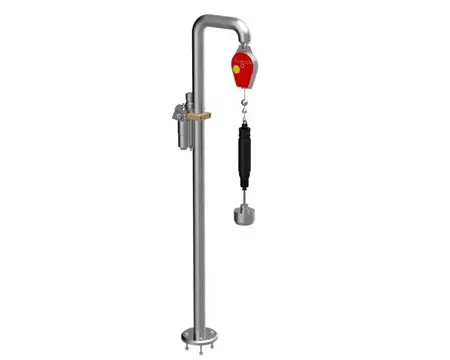
K901 CAPPING MACHINE
Compatible Cap Types: Metal Twist-Off Caps Plastic Screw Caps Metal

K921 CAPPING MACHINE
CAPS IT CAN CLOSE: Plastic Bucket Lids Metal Tin Lids

K932 CAPPING MACHINE
CAPS IT CAN CLOSE: Plastic Bucket Lids Metal Tin Lids
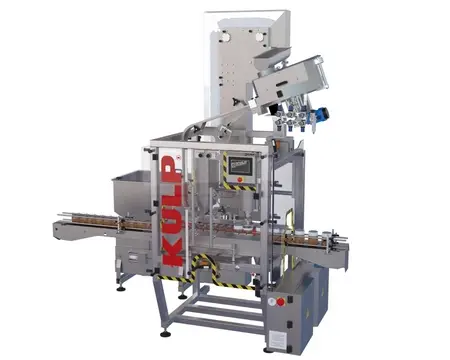
K936 CAPPING MACHINE
CAPS IT CAN CLOSE: Metal Twist-Off Caps Plastic Screw Caps

K937 CAPPING MACHINE
CAPS IT CAN CLOSE: Metal Twist-Off Caps Plastic Screw Caps
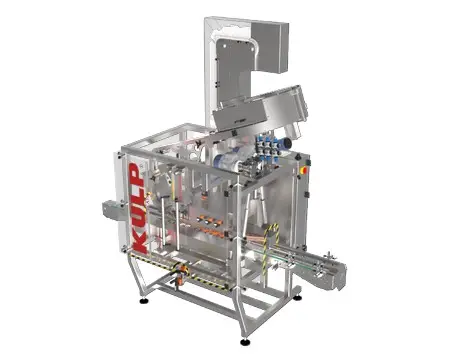
K938 CAPPING MACHINE
CAPS IT CAN CLOSE: Metal Twist-Off Caps Plastic and Metal
Capping Machines
Capping Machines: The “Final Touch” of Production and Leak-Proof Guarantee
Those working on the production floor know the feeling well: the throbbing in the fingertips and the pain in the wrists caused by manually tightening hundreds, perhaps thousands, of bottle caps throughout the day. Beyond the physical hardship, the real nightmare begins when the “human factor” comes into play.
A cap tightened by an operator starting their shift fresh in the morning will never have the same tightness as one tightened by an exhausted operator in the evening. The result? Shampoos leaking in transit, sauces spoiling on the shelf due to air intake, and angry customers complaining that “the cap won’t open!”
At Kulp Makine, we state it clearly: the capping process is the most strategic safety barrier of your production line.
A good Capping Machine is not just a “tightening tool”; it is the protector of your brand’s reputation. Let’s talk about how to eliminate the risks brought by manual capping and how to provide your product with that professional “click” sound.
Why You Must Automate (The Matter of Torque)
In engineering, there is a concept we call “Torque”—the rotational force. To prevent a cap from leaking, it must be tightened to a specific torque value.
If you tighten it too loosely: The product spills and takes in air.
If you tighten it too hard: The cap cracks, the threads strip, or the customer cannot open the cap (which is an experience as bad as leaking).
The human hand cannot maintain this “golden ratio.” But machines can. Kulp Makine’s torque-adjusted capping systems close the 1st bottle and the 10,000th bottle at exactly that ideal tightness you set. No more, no less.
Which Cap, Which Machine?
The world of caps is like an ocean. Screw caps, snap-on caps, trigger sprays, lotion pumps, metal twist-off caps… Each speaks a different language.
1. Screw Capping
The most common type. Shampoo, water, medicine bottles… The key here is to tighten the cap without scratching its outer surface. The special silicone or polyurethane tightening heads we use in our machines gently grip and tighten the cap. No deformation or scratches occur.
2. Snap-on Capping
These are caps that close by applying vertical pressure rather than rotating (such as some detergents or paint cans). Here, the vertical pressure power and precision of the machine come into play.
3. Tough Players: Sprays and Pumps
This is the most difficult area to automate. The “straw” (dip tube) part of trigger sprays or soap pumps must enter the bottle, and then the head must be tightened. This is one of our areas of expertise at Kulp Makine. Our specially designed systems process even these asymmetrical and difficult caps without any problems.
Kulp Makine Difference: Technology That Speaks the Manufacturer’s Language
You may see cheap, plastic-component machines of East Asian origin on the market. They may seem attractive initially. However, when a gear breaks 3 months later or the torque setting fails and thousands of your products are returned, you will say “If only…”
At Kulp Makine, we design our machines according to the challenging conditions of manufacturers.
316L and 304 Stainless Steel Body: Our machines withstand heavy industrial conditions. They do not rust, bend, or warp. They 100% meet hygiene standards in food and pharmaceutical production.
Flexibility (Format Changeover): Today you are closing a screw cap on a 500 ml bottle; tomorrow you will be closing a snap-on cap on a 1-liter bottle. Changing parts and making adjustments on our machines is simple, not like solving a puzzle. Thanks to adjustment handles that require no tools, your operator switches to the new product within minutes.
Precise Torque Control: Thanks to the magnetic or servo torque systems we use, you can adjust the tightening power millimetrically.
Semi-Automatic or Fully Automatic?
When deciding, you should look at your production volume.
Semi-Automatic (Benchtop) Systems: The operator places the bottle, sets the cap on top, and the machine tightens it. Great for productions of 3,000–5,000 units per day. It is economical, compact, and a lifesaver.
Fully Automatic Lines: These take the caps automatically from the feeding unit (vibrator or elevator), place them on the bottle, and close them. This is a speed beast for facilities producing tens of thousands per hour. Human hands never even touch the cap.
“Peace of Mind” as an Investment
When you buy a capping machine, you are actually buying “peace of mind.” When you go to bed at night, you don’t wonder, “Were the caps on the 5,000 bottles we sent out today tight enough?” You know that the machine did its job. Your customers encounter the same quality every time they buy your product.
Furthermore, it is important for occupational health and safety. You protect your staff from occupational diseases (such as carpal tunnel syndrome) caused by repetitive motions. A happy employee means efficient production.
Conclusion: Seal Your Brand Tight
No matter how high the quality of your product’s content is, its packaging and cap are the showcase of that quality. A leaking bottle can destroy the entire brand perception.
With Kulp Makine’s durable, precise, and user-friendly capping solutions, eliminate that final risk on your production line. Whether it’s screw, snap-on, or pump-action; we have a technique for every cap and a machine for every manufacturer’s budget.
Take your cap samples and come to our factory. Test it with your own eyes and feel that perfect “tightness.”
Frequently Asked Questions (FAQ)
1. Do I need to buy separate machines for different-sized bottles and caps?
No. Kulp Makine systems are designed with a “universal” logic. You can close all caps within a certain range (e.g., between 20mm and 80mm) on the same machine. It is enough to change the tightening head or simply loosen and tighten the adjustment handles. One machine, many tasks.
2. Can I automatically close spray (trigger) or lotion pumps?
Yes. These caps are difficult due to their long dip tubes (straws). However, in our automatic lines, we use special “guide systems” that direct this tube into the bottle. Automatic capping is possible without the need for manual intervention.
3. The outside of my caps is shiny or delicate; will the machine scratch them?
This is one of the issues we are most sensitive about. Especially in the cosmetics sector, caps can be gold or silver gilded. In our machines, we use special soft polyurethane materials on the jaws or wheels that grip the cap. It holds the cap firmly but never scratches it.
4. Can I close metal (Twist-off) caps?
Screw plastic caps and metal jar lids (pickles, jam, etc.) have different working principles. Metal lids require steam vacuum closing systems or special tighteners called “Twist-Off.” If you specify your need, we integrate the appropriate head into the machine.
5. How will I set the torque? Is it very complicated?
Absolutely not. Our semi-automatic machines have mechanical or digital torque adjustments. With a few trials (tightening the cap and trying to open it by hand), you find the ideal setting and fix it. It is simple enough for your operators to learn with just 5 minutes of training.